
Apopka Previous Resident Sources
Each era of an Apopka property calls for a different source. The current parcel card is the starting key, not the full answer. It supplies the owner, parcel number, situs address, legal description, and often a sale reference. The deed index then carries the ownership trail back. Directories and census records address the separate question of occupancy. Maps and permits describe the building itself. The strongest house history keeps those strands apart until names, dates, and the land description agree.
| Apopka source | Verified span | Access point | Best evidence |
|---|---|---|---|
| Orange Official Records | Guide states January 1, 1878 forward | Web index or Comptroller counter | Indexed parties, instruments, and land descriptions |
| Apopka directories | Fifteen year groups, 1969 through 1991 | Brechner Research Center | Name and address snapshots, subject to volume contents |
| Federal census | Public schedules through 1950 | NARA and genealogy collections | Households at the census date |
| Apopka Sanborn map | 1924 | Brechner Research Center | Structure footprint, use, material, and street layout |
| Building permits | Portal start year unverified | Apopka Building Safety and OpenGov | Work, applicant, owner or contractor, and improvement dates |
For recent work, start with the Orange County Property Appraiser and the recorder. For the late twentieth century, take the stable legal description to the local directory run. For an older structure, add the map, tax ledgers, title abstracts, and deeds held by the History Center. The date of the question matters. A directory proves a listing at one publication point, a census records one enumeration date, and a deed proves a recorded title act rather than everyone who slept under the roof.
Search Apopka Deeds Backward
The Orange County Official Records search is indexed by party, date, document type, document number, and book/page. It is not led by street address. Find the current owner and acquisition instrument on the parcel record first. In the recorder, an individual name is entered last name first. Either Party checks both sides of an instrument, while Grantor and Grantee keep the role fixed. The asterisk wildcard helps with initials, suffixes, spelling changes, and index variants.
The index result should be treated as a catalogue entry. Record the party role, document type, recording date, instrument number, book/page, and legal remarks, then open the image where it is available. The underlying document controls. A deed with the right surname but a different subdivision, lot, or legal description belongs to another trail. Search satisfactions and releases on their own because a lien entry may not report what happened later.
The official search help shows how party fields, dates, wildcard terms, and multiple document types narrow a search.
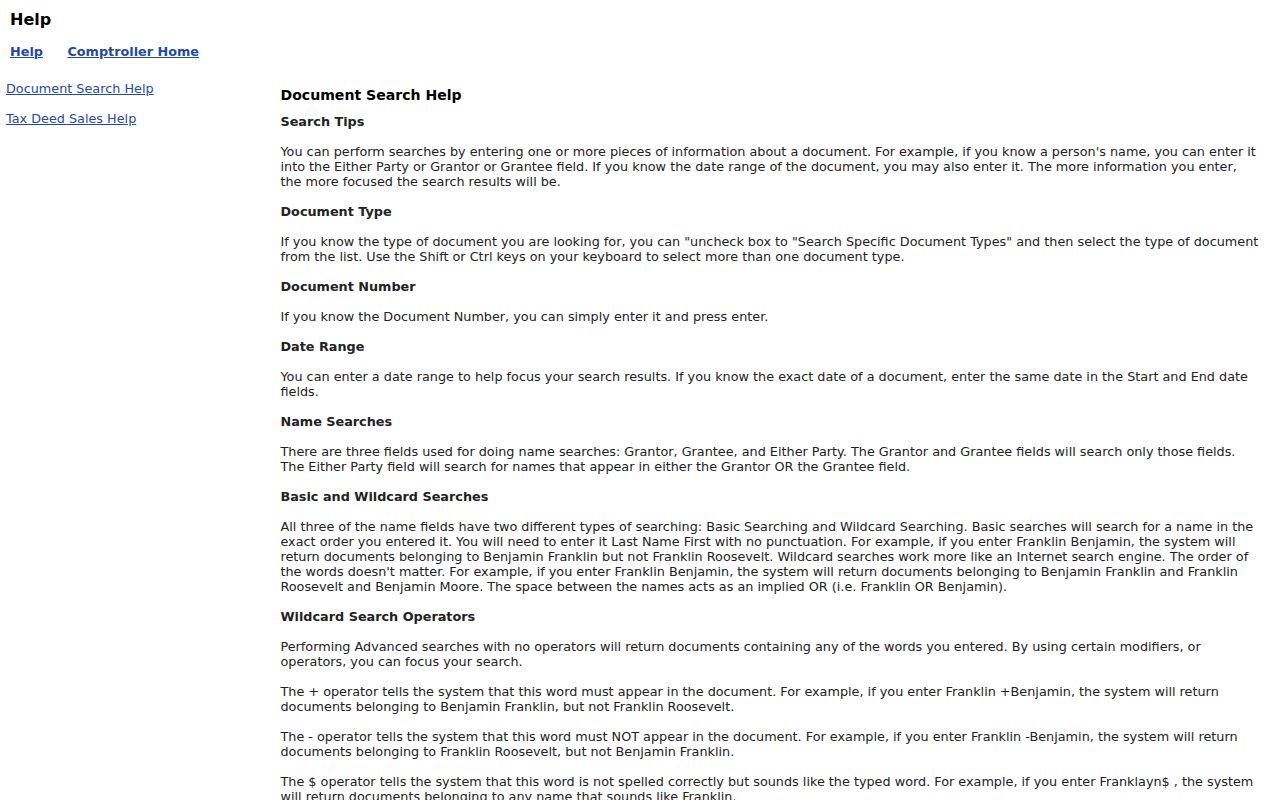
The captured help screen is useful when an old owner appears under initials or a name order that does not match the modern parcel card.
Trace Orange County Past Owners
A backward chain turns each seller into the next search subject. Keep a simple log of names, roles, dates, instrument numbers, and the legal description. That log prevents two Apopka parcels owned by people with similar names from being merged. It also shows exactly where the chain stops online and where a counter or archive visit must begin.
- Open the present OCPA parcel. Copy the owner, parcel ID, legal description, and current acquisition reference.
- Find that acquisition deed. Confirm the same land, then record the seller, who is the grantor.
- Search that seller as an earlier grantee. Open the prior acquisition and confirm the land again.
- Repeat the handoff. Search spelling variants and use instrument or book/page data whenever possible.
- When an image or index ends, contact Official Records or Records Management for the older book, roll, or counter path.
- Grantor and grantee
- The grantor gives an interest in land; the grantee receives it.
- Chain of title
- The linked series of transfers for the same property.
- Legal description
- The recorded land identity, often based on lot, block, plat, or metes and bounds. It is more stable than a street address.
The live Official Records portal shows the main index used for this handoff.
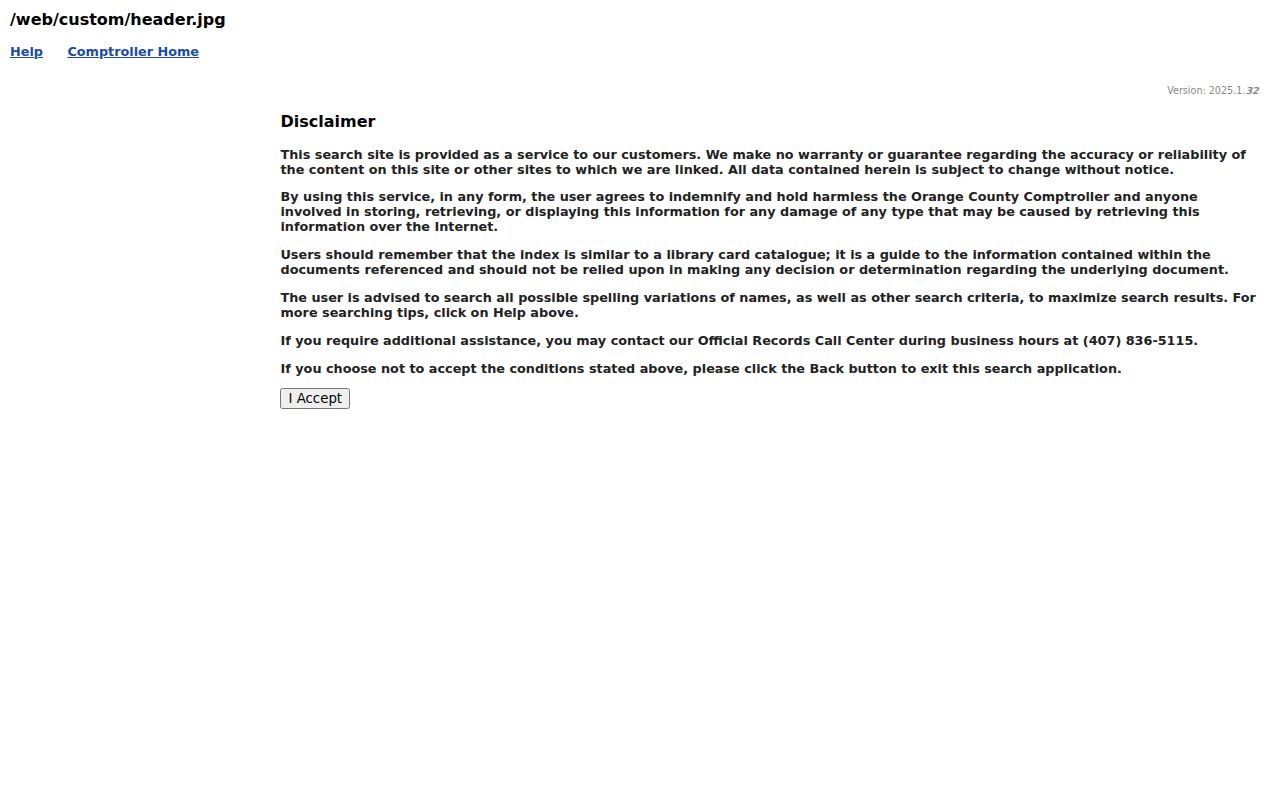
This view reinforces why the researcher brings an owner name and date from OCPA instead of expecting a plain address box.
Apopka Records Beyond the Web
The web index is only one access channel. Orange County Official Records at 109 E Church Street, Suite 300, is the fallback for a missing image, a failed index, an older book, or an access question. The office is open weekdays from 7:30 a.m. to 4 p.m. and can be reached at 407-836-5115. Web viewing and printing are free for research. County guidance lists ordinary copies at $1 per page, certification at $2 per document, and a staff search at $2 per name per year. Confirm a total before ordering.
The county's Official Records FAQs explain copy routes and the difference between a parcel search and a deed search.
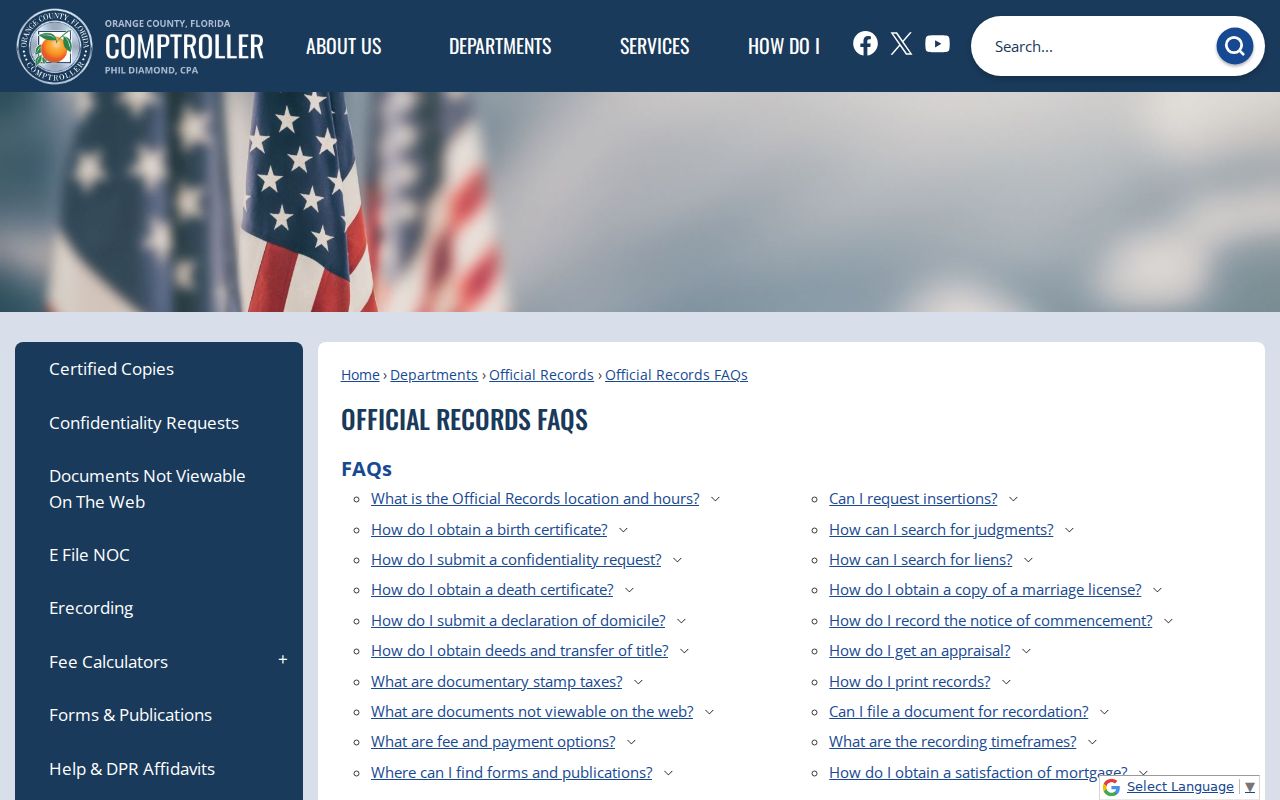
The FAQ capture points back to the custodian when a free screen image is not enough and a certified record is needed.
For older evidence, Comptroller Records Management at 1800 Cypress Lake Drive works by appointment. The Brechner Research Center also holds deed material from 1878 to 1981, grantor and grantee roll indexes for 1938 to 1955, title abstracts, tax ledgers, and REDI plot books. Those are distinct collections, so describe the property, names, dates, and legal description when asking staff for help.
Map Apopka House Changes
The sole Apopka Sanborn year identified in the local guide is 1924. It can show a building footprint, material, use, street pattern, and utilities at that date. It cannot establish continuous occupancy. Compare the map with the parcel's legal description and later deeds before deciding that a mapped structure is the same building now on the lot. No authoritative dated citywide street renumbering was found, so do not invent one to explain a mismatch.
Permits provide a more recent layer. Apopka Building Safety routes searches to OpenGov by address or record number. Results may tie work to an applicant, owner, contractor, and improvement date. The portal's start year was not verified. For older work, ask the city for a defined address and date range under Chapter 119. First turn on the OCPA jurisdiction layer because an Apopka mailing address can lie outside city limits and have a county custodian instead.
Note: A permit records work at a parcel; it does not prove that the applicant, owner, or contractor lived there.
Why Early Apopka Chains Break
Orange County's first formal courthouse burned in autumn 1868 during a cattle-rustling prosecution. The county history says turpentine bottles suggested arson, and almost all early records were destroyed. That loss helps explain why an Apopka title trail may go quiet before the post-fire record era. It is not proof that no earlier owner or transaction existed.
Search old place names too. Orange County began as Mosquito County in 1824 and received its current name in 1845. A pre-1845 Apopka-area family or land item may be catalogued under Mosquito County. Federal and state land records, tax evidence, newspapers, private papers, reconstructed abstracts, church records, and cemetery material can bridge the gap. An abstract of title is especially useful because it may condense deeds, wills, divorces, and incorporations from sources no longer easy to trace one by one.
Apopka Past Household Evidence
Owners are not the same as occupants. The Brechner Research Center lists Apopka directories for 1969 to 1971, 1973, 1974, 1976, 1978, 1981, 1986, 1987, and 1989 to 1991, plus telephone books for 1988 to 1989 and a combined Apopka and Winter Garden book from 1965. Whether a given volume has a reverse street section must be checked on site. The full shelf and reading method belong to the Apopka city directory resource.
Pairing those snapshots with census and death evidence can uncover previous residents who never held title:
- Copy the exact name, address, page, column, and any spouse or widow notation in the directory.
- Check the same address in the next available volume. Treat an absence as a lead, not a move date.
- Use the 1950 census, the newest public federal population schedule in 2026, when the time period fits.
- Bridge later gaps with deeds, tax rolls, permits, newspapers, obituaries, and probate records.
An obituary can link a deceased Apopka resident to relatives and a later place. Probate petitions, wills, appointments, and orders may explain an estate deed. Neither proves that every heir lived at the house. City cemetery records have no online interment search, but the City Clerk holds plot maps, interment permits, and Right of Interment certificates and transfers. A focused request can turn a dead end into a documented kinship or burial-right trail.
Lawful use. Research previous residents for house history, family history, or a lawful personal reason. Never use a past address to track, threaten, or harass a living person.
Keep Apopka Deed Findings Clear
A deed alert and a title search serve different purposes. Orange County's fraud alert sends notice when a document matching a registered name is recorded. It does not stop a filing, decide whether it is genuine, or cancel an instrument. A researcher tracing past residents should still inspect the document and confirm the land, parties, and role.
The Orange County property-fraud page explains the alert and the steps an owner can take after receiving one.
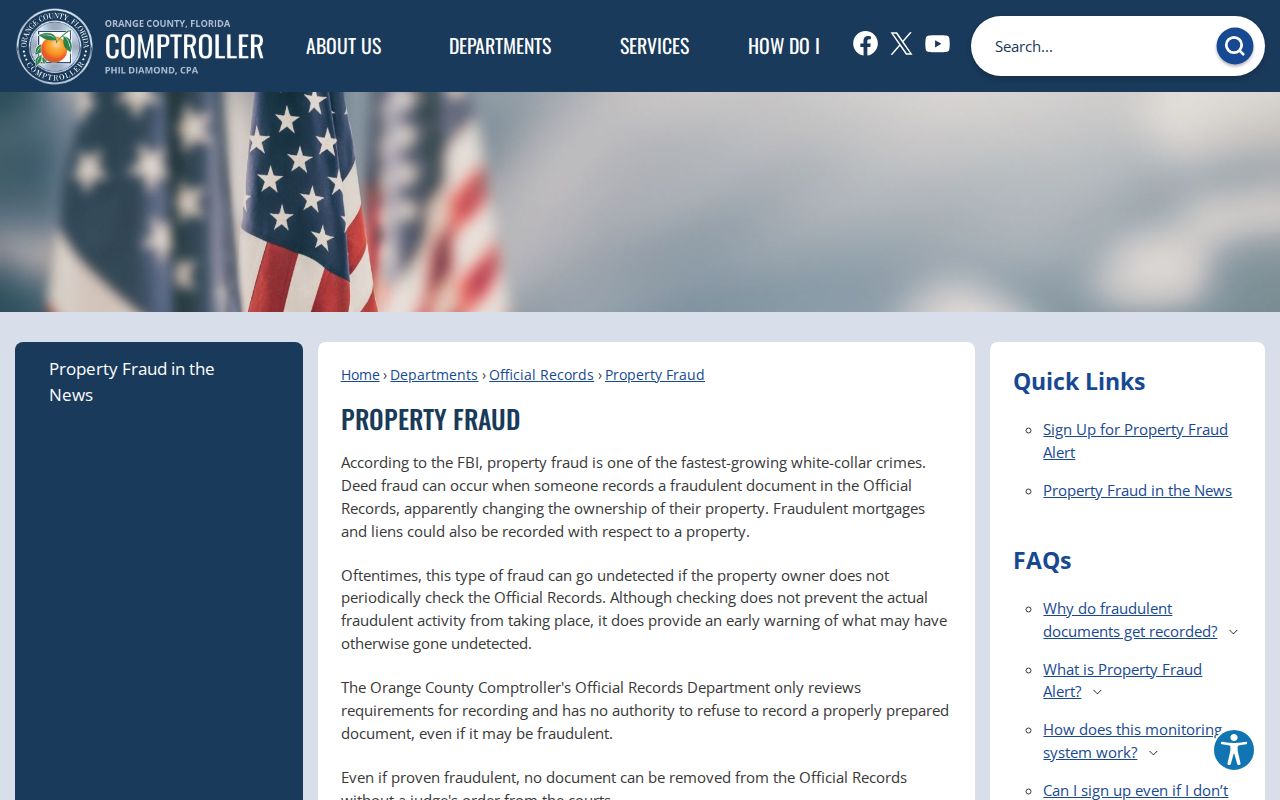
The alert page is a useful reminder that a newly indexed name is a prompt to inspect the record, not a final finding about ownership or occupancy.
Close Apopka Resident Trails
Vital records can place an event at the end of a household trail. Florida marriage and dissolution abstracts are public, while a full marriage license or divorce case file comes from the Orange County Clerk. Births under 125 years have eligibility limits. A death certificate without cause is available to an adult, but the cause remains restricted for 50 years to eligible relatives, estate representatives, legal representatives, or a court order. Those limits must be respected when confirming previous residents.
The Florida vital-record forms page supplies the official applications for mail and other approved request channels.
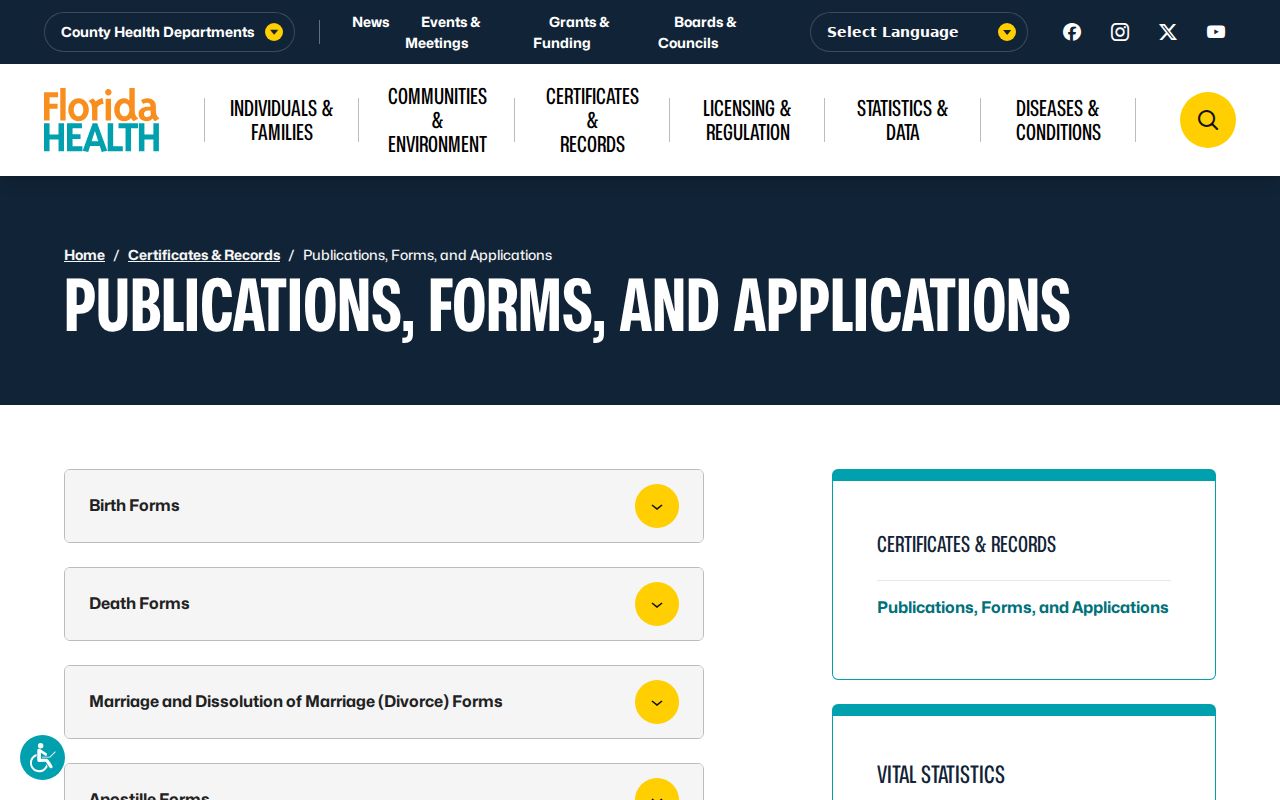
The forms show what facts and proof the state needs, helping the researcher order the right record without treating a restricted certificate as a public directory entry.