
Apopka City Directory Shelf
The Joseph L. Brechner Research Center at the Orange County Regional History Center holds the verified Apopka city directory run. It is at 65 E Central Boulevard in Orlando, open weekdays from 10 a.m. to 5 p.m.; an appointment is preferred. The collection has missing years, so researchers should treat each volume as one dated observation.
| Collection | Verified years | Where held | Access |
|---|---|---|---|
| Apopka city directories | 1969–1971, 1973, 1974, 1976, 1978, 1981, 1986, 1987, 1989–1991 | Brechner Research Center | Appointment preferred |
| Apopka telephone books | 1988–1989 | Brechner | On-site research |
| Apopka/Winter Garden telephone book | 1965 | Brechner | On-site research |
| Orlando Suburban directories | 1969, 1970, 1972–1983, 1986 | Brechner | Inspect for Apopka coverage |
| Orange County directory | 1997 | Brechner | On-site research |
| State Library directories | Early 1900s to present statewide | Florida State Library | On-site, arranged by city/year |
The History Center guide identifies fifteen Apopka year entries or year groups from 1969 through 1991. Exact publishers, entry syntax, abbreviation keys, and the presence of reverse sections remain unverified until a volume is inspected. The table preserves that gap instead of filling it from another city's run.
Research Apopka at Brechner
Brechner covers nearly two centuries across seven Central Florida counties. Its overall holdings include more than 300 cubic feet of archives, over 16,000 photographs and postcards, and more than 5,000 volumes, maps, and vertical files. Those are center-wide totals, not counts for Apopka alone.
The same center keeps title abstracts, assorted deeds, tax receipts, a poll and property-tax ledger, automobile-tag ledgers, sheriff arrest ledgers, and TRW REDI plot books. Each has a different purpose. A tax or vehicle ledger is evidence about a named transaction, not a complete population directory.
The Florida State Archives genealogy overview shows the broader family and local-history sources available when the local shelf ends.
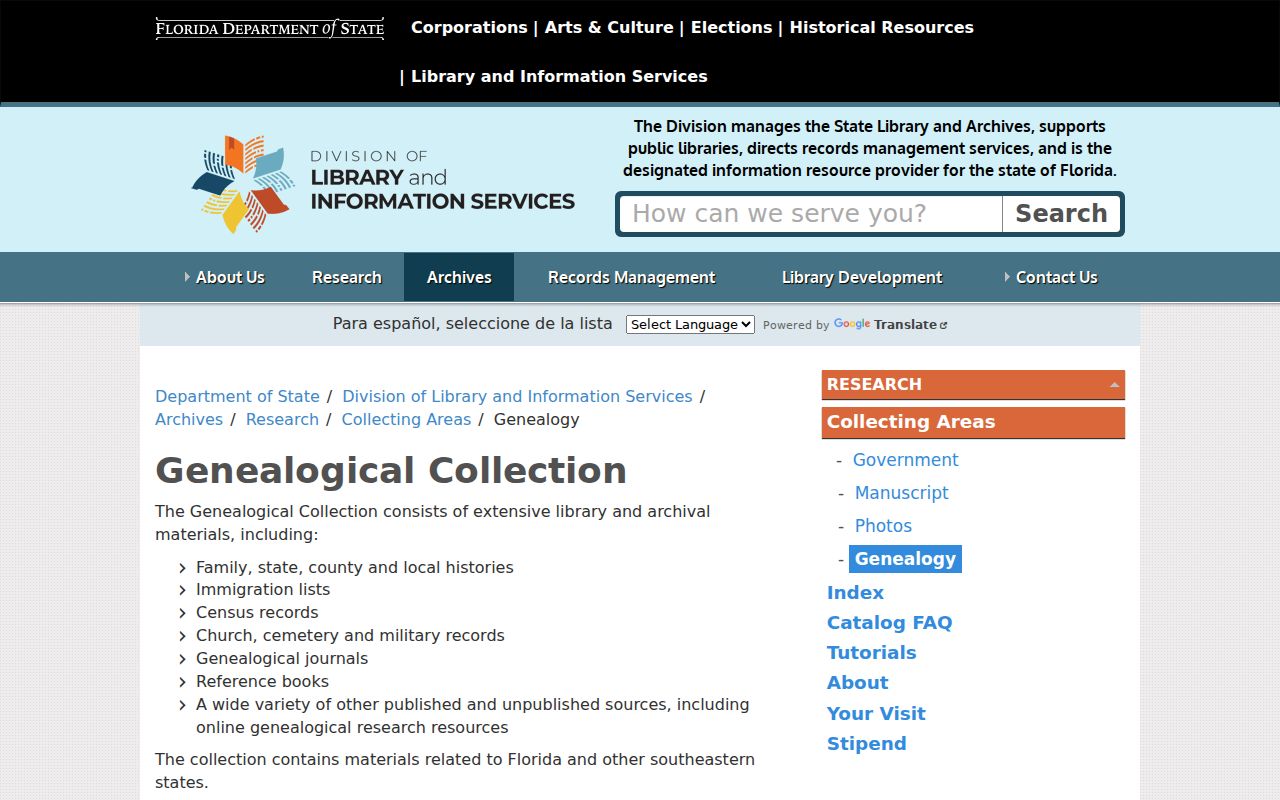
The state collection can add census, church, cemetery, military, immigration, and family-history material to a dated directory find.
Read an Apopka Directory Entry
Begin with the alphabetical name section. Copy the spelling exactly, then record page and column. Inspect the volume's key before expanding any short form. Because no scanned sample Apopka page was located, the fields below are an inspection checklist, not a claim that every volume prints all of them.
| Name | Surname, given name, initials, and any spouse or widow notation |
|---|---|
| Work detail | Occupation or employer, when the volume prints it |
| Home address | House number, street, and any residence notation |
| Property mark | Possible owner or renter symbol, only if defined by that volume |
| Business entry | Separate listing that may not be a home address |
| Citation | Year, title, page, column, and repository |
- Criss-cross directory
- A section ordered by street and house number. Confirm that the specific volume contains one before relying on it.
- Householder index
- An index centered on the person identified as the main listed householder, not every resident.
- Abbreviation key
- The volume's own list of short forms and marks. Photograph it before interpreting entries.
A telephone book may show only the subscriber. Likewise, an apparent owner mark means only what that publisher's key says it means. These limits keep an Apopka city directory entry from being stretched into a full household profile.
Apopka Telephone Book Clues
The local holdings include an Apopka/Winter Garden telephone book from 1965 and Apopka books from 1988–1989. They can fill part of the gap before or within the main directory run. Search the surname first, copy the printed number and address, and then check for a business listing under the same name.
A telephone listing proves that a subscriber was associated with the service at publication time. It does not list each adult, confirm ownership, or prove that a person stayed for the whole year. Pair it with an adjacent Apopka city directory volume, a parcel or deed record, and a newspaper item before joining identities.
Trace Families in Apopka Directories
A careful year-to-year method distinguishes a real move from a missing volume. The Apopka run jumps over several years. Disappearance can mean a move, death, name change, omission, an unlisted phone, or a change in publisher coverage.
- Find the name in the earliest likely directory. Save the exact spelling, address, page, column, and key.
- Check each next available Apopka year. Note a spouse or widow notation, work detail, and every address change without assuming why it changed.
- If that volume has a reverse section, browse the address. If it does not, use a telephone book or the modern address-keyed methods on the Apopka street directory.
- Pair dates with deeds, tax records, permits, probate, obituaries, and newspapers. Match the legal parcel before treating two address forms as one place.
- Use the 1950 federal census for an older household check. As of 2026, it is the latest public population schedule under the 72-year rule.
The 1960 and 1970 individual federal schedules are not yet public. Published census totals may provide broad context, but they cannot identify an Apopka household. FamilySearch collections for Florida marriages and probate can also supply bridges, subject to free-login or affiliate access limits.
Apopka's Single Sanborn Snapshot
The Brechner guide identifies one Apopka Sanborn fire-insurance map, dated 1924. It can show street arrangement, building footprint, materials, use, and utilities at that moment. One map cannot prove continuous occupancy or a full construction date.
Compare the mapped building with the recorded legal description and later parcel. Ask Brechner for its architectural and real-estate guide and any title abstract tied to the property. An abstract may condense deeds, wills, divorces, and incorporations, making it useful when direct records are hard to follow. The 1924 map also belongs with 1880s tax evidence and later directories, not as a substitute for them.
Early Apopka Directory Substitutes
Before the modern Apopka city directory run, Brechner's related shelves include Florida business directories for 1886–1887 and 1911–1912, an Orange County business directory from 1887, tax receipts from 1884–1885 and 1891–1894, and a poll/property-tax ledger for 1891–1892. The ledger can join a dated owner, legal description, and payment.
Place names require care. Orange County began as Mosquito County on December 29, 1824 and took its current name in 1845. Pre-1845 catalog searches for the Apopka area should therefore include “Mosquito County.” Apopka itself incorporated in 1882 as the Town of Apopka City, with an original one-mile radius from the Lodge.
The 1859 Lodge supplied the early community name. Commercial fern growing began in 1922 and later gave rise to “Fern City.” Business directories, nursery advertisements, land records, newspapers, and organizational files can trace that local industry without implying the existence of a private worker list.
Fire Changed Apopka Record Trails
Orange County's first formal courthouse was a two-room log building dedicated in 1863. It burned in autumn 1868 during a cattle-rustling prosecution. Turpentine bottles suggested arson, and almost all early records were destroyed. The loss helps explain why a missing early county entry is not proof that a person or property link never existed.
| Year | Record-history event |
|---|---|
| 1824 | Mosquito County was created, the catalog name needed for the earliest regional searches. |
| 1845 | The county took the Orange County name. |
| 1868 | The courthouse fire destroyed almost all early county records. |
| 1878 | The recorder's guide begins its searchable and certifiable coverage statement. |
| 1969 | The verified Apopka directory run begins. |
| 1991 | The last Apopka year in the identified local run. |
Read the Ninth Judicial Circuit's Orange County courthouse history for the documented account.
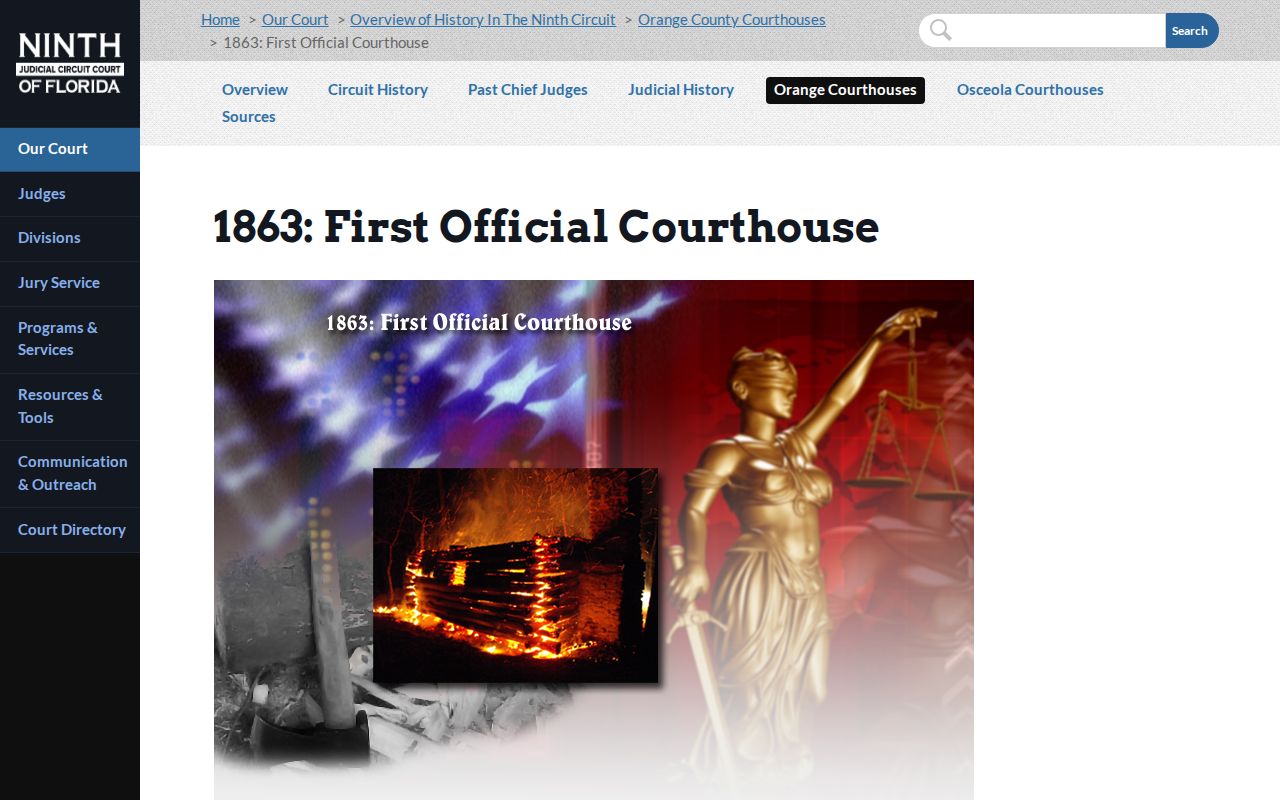
The fire makes substitute sources such as land records, tax ledgers, newspapers, churches, cemeteries, and private abstracts essential for early Apopka research.
Ask the Apopka Museum
The Apopka Historical Society Museum at 122 E Fifth Street accepts research requests with Name, Email, Phone, and Topic of Research fields. It is open Wednesday through Friday from noon to 5 p.m. and Saturday from 9 a.m. to 1 p.m.; the phone is 407-703-1707. A useful request names the family, business, or place, gives an address or legal description when known, sets approximate years, and lists the city directory volumes already checked.
Use the Apopka Museum research request when the published shelf is silent.
A volunteer response is a lead. Preserve the collection and item citation for any fact used later.
The society incorporated in 1968 after Edward A. Miner's 1967 Folk Festival exhibit inspired its formation. The Apopka Chief, founded in 1923, is another key route for obituaries, businesses, probate notices, and addresses. Its February 2025 ownership change split older issue archives from later public-notice routes, so search both.
Extend Apopka City Directory Research
The Florida State Library keeps city directories from the early 1900s to the present, arranged by city and year for on-site use. The statewide shelf may fill context around the verified Apopka run, but it should not be described as digitized unless the specific item is confirmed online.
Visit the official Florida city directories collection for access instructions.
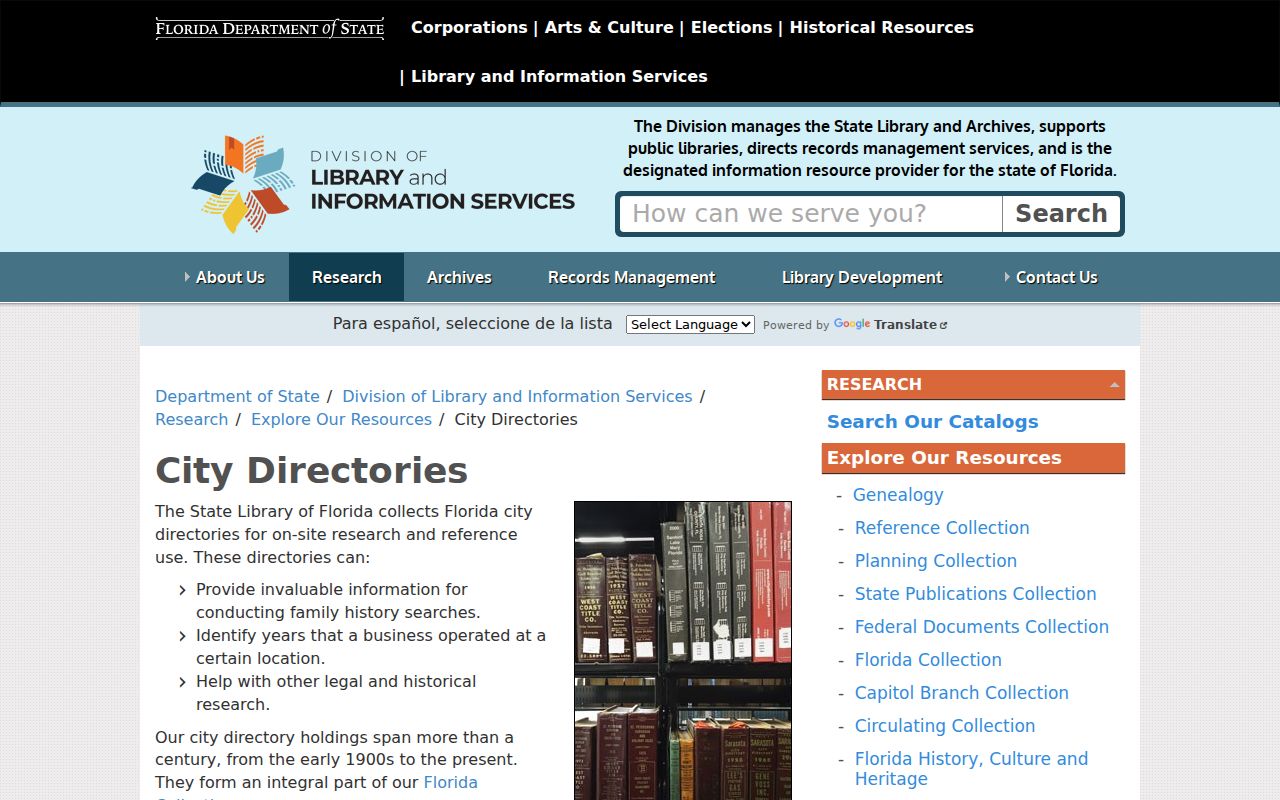
The state shelf is a fallback for missing local volumes, while Brechner remains the source for the exact verified Apopka holdings.
Search every repository with name variants, compound surnames, maiden names, hyphens, and initials. Do not infer identity or background from a surname. A city directory result becomes far stronger when an independent deed, tax, probate, newspaper, or census source supports the same person, date, and place.